

Speed mapping in Path of Exile offers a powerful sense of momentum. Screens clear quickly, rewards arrive in bursts, and progress feels tangible minute by minute. For many players, this pace becomes addictive, turning efficiency into identity. However, beneath this rush lies a hidden cost that slowly erodes progress.
Constant deaths, even when individually dismissed as minor setbacks, accumulate into lost experience, broken focus, and unstable builds. Over time, the addiction to speed reshapes decision-making, prioritizing tempo over survivability and excitement over sustainability. This article explores how speed mapping addiction develops and why its long-term cost is often underestimated.
The Appeal of Uninterrupted Momentum
Speed mapping delivers immediate gratification. Clearing maps rapidly creates a sense of mastery, reinforcing the belief that faster is always better. Players associate speed with competence, efficiency, and success, especially when watching optimized builds or content creators.

This mindset encourages pushing beyond defensive comfort zones, accepting deaths as acceptable collateral. The constant forward motion suppresses reflection, as stopping feels like failure. Over time, speed becomes not just a strategy, but a requirement for enjoyment, narrowing the range of playstyles that feel satisfying.
Deaths Normalized Through Repetition
When deaths occur frequently, they lose emotional weight. Players begin to treat them as routine interruptions rather than warning signals. Experience loss becomes background noise, and defensive weaknesses are ignored as long as progress feels fast. This normalization creates a feedback loop where risk-taking escalates without evaluation.
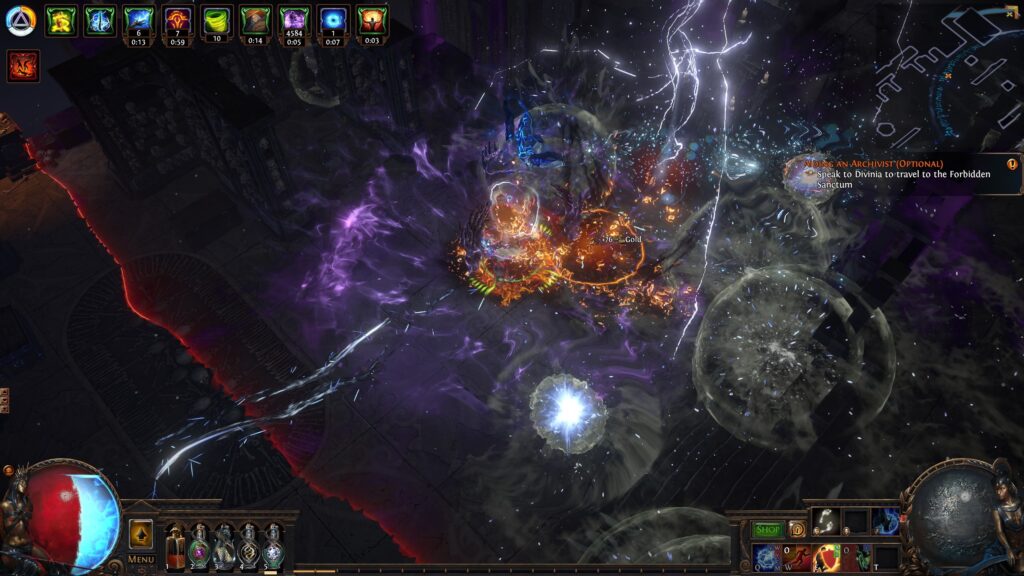
While individual deaths may seem inconsequential, their cumulative impact reduces leveling efficiency, interrupts rhythm, and gradually destabilizes confidence. The cost is rarely felt immediately, which allows the pattern to persist unchecked.
Hidden Costs That Accumulate Over Time
Speed mapping addiction carries costs that are not immediately visible. These consequences build slowly, often becoming apparent only after prolonged play.
- Repeated experience loss delaying high-level progression
- Increased mental fatigue from constant recovery
- Reduced build reliability in unfamiliar content
- Lower tolerance for mechanics that require patience
These costs compound subtly, reducing long-term efficiency despite short-term gains.
When Speed Stops Translating Into Progress
There is a threshold where additional speed no longer produces meaningful progress. At this point, deaths consume more time than speed saves. Maps are re-entered, experience bars stagnate, and frustration replaces excitement.
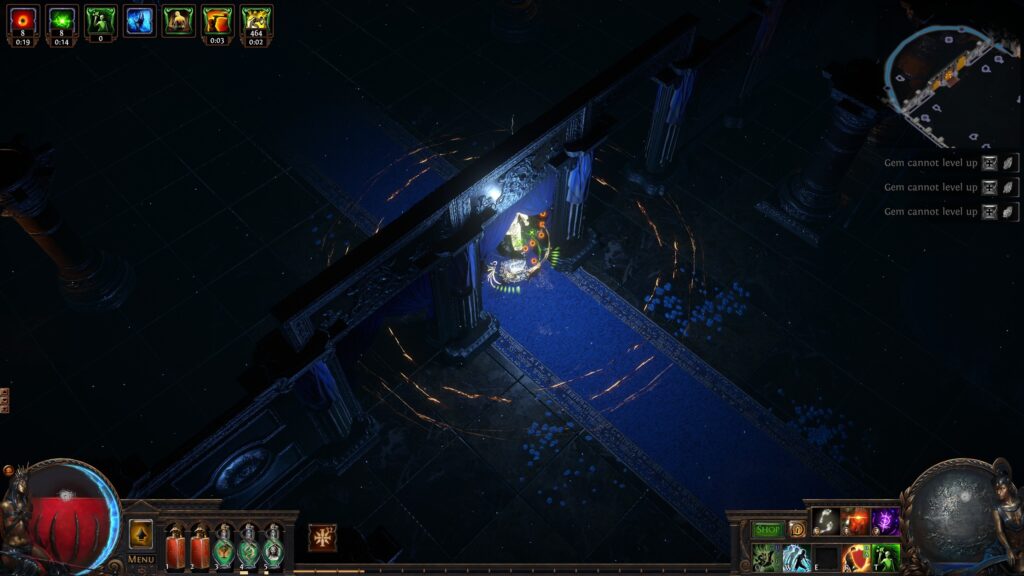
Players caught in this loop often respond by pushing harder rather than reassessing, further amplifying the problem. Recognizing this tipping point is difficult because it requires slowing down, which feels counterintuitive to the habits already formed.
Reframing Speed as Controlled Efficiency
Sustainable speed mapping reframes pace as controlled efficiency rather than reckless acceleration. Players who succeed long-term maintain momentum without sacrificing survivability. They accept slightly slower clears in exchange for stability, allowing progress to compound without interruption. This balance preserves enjoyment while eliminating the hidden drain caused by constant deaths. Speed becomes a tool rather than a compulsion.
Conclusion
Speed mapping addiction thrives on momentum but ignores long-term cost.
Constant deaths erode progress quietly, turning apparent efficiency into delayed stagnation. By recognizing the difference between speed and control, players reclaim sustainability. In Path of Exile, true efficiency is not how fast maps are cleared, but how consistently progress is preserved.
Leave a Reply